As a veteran-owned business, security is something we think about differently than the average contractor. When we look at a garage door, we're not just evaluating its mechanical condition — we're evaluating its security posture. And most residential garage doors fail that evaluation.
The "coat hanger trick" — using a bent wire hook slipped through the top of the garage door to trip the emergency release — can open most standard garage doors in under 10 seconds. It requires no tools, no expertise, and leaves no visible signs of forced entry. Law enforcement and security researchers have documented it extensively. And yet most homeowners have never heard of it and have done nothing to mitigate it.
This guide covers the most common garage security vulnerabilities and practical, affordable steps to address them.
Vulnerability #1: The Emergency Release Cord
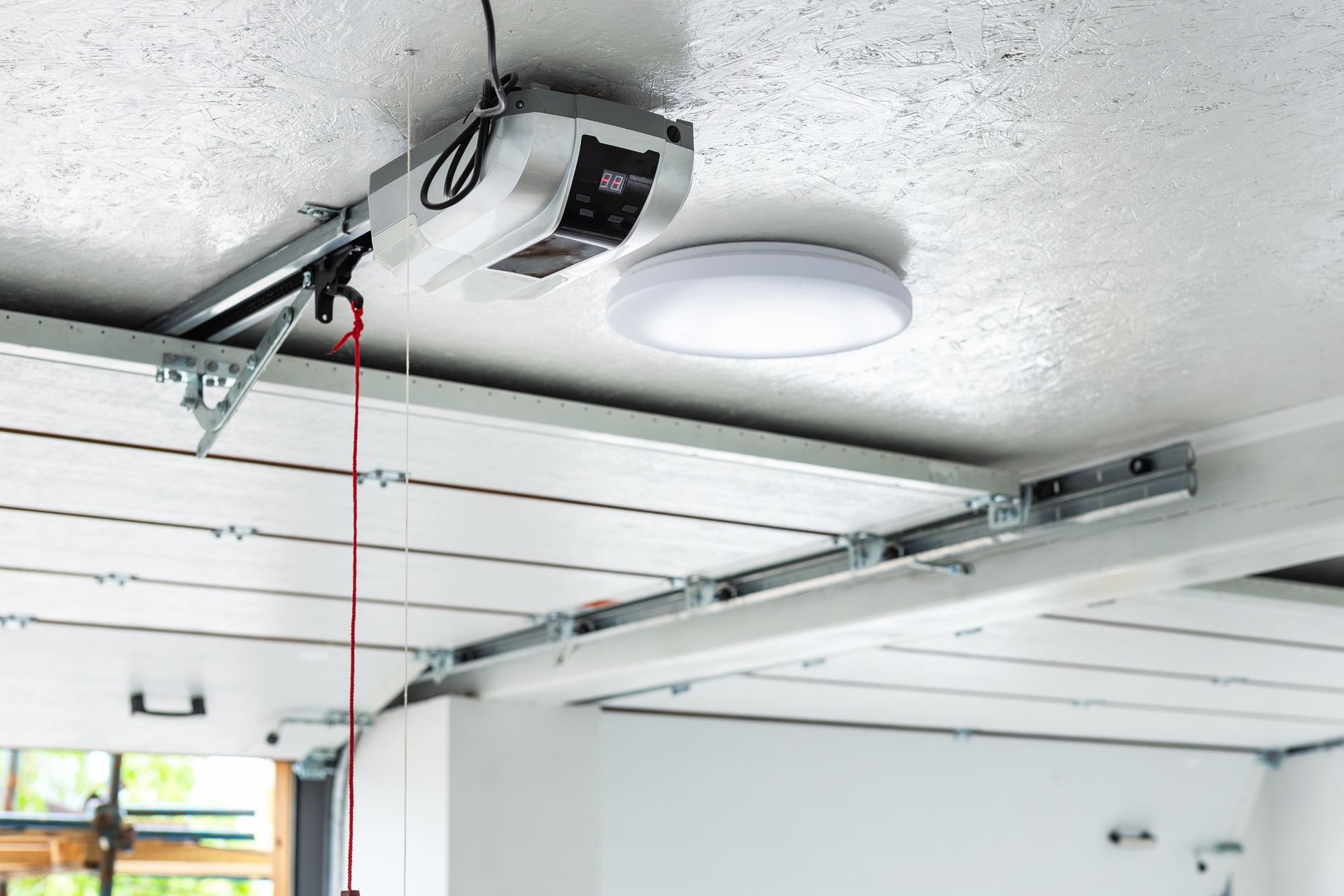
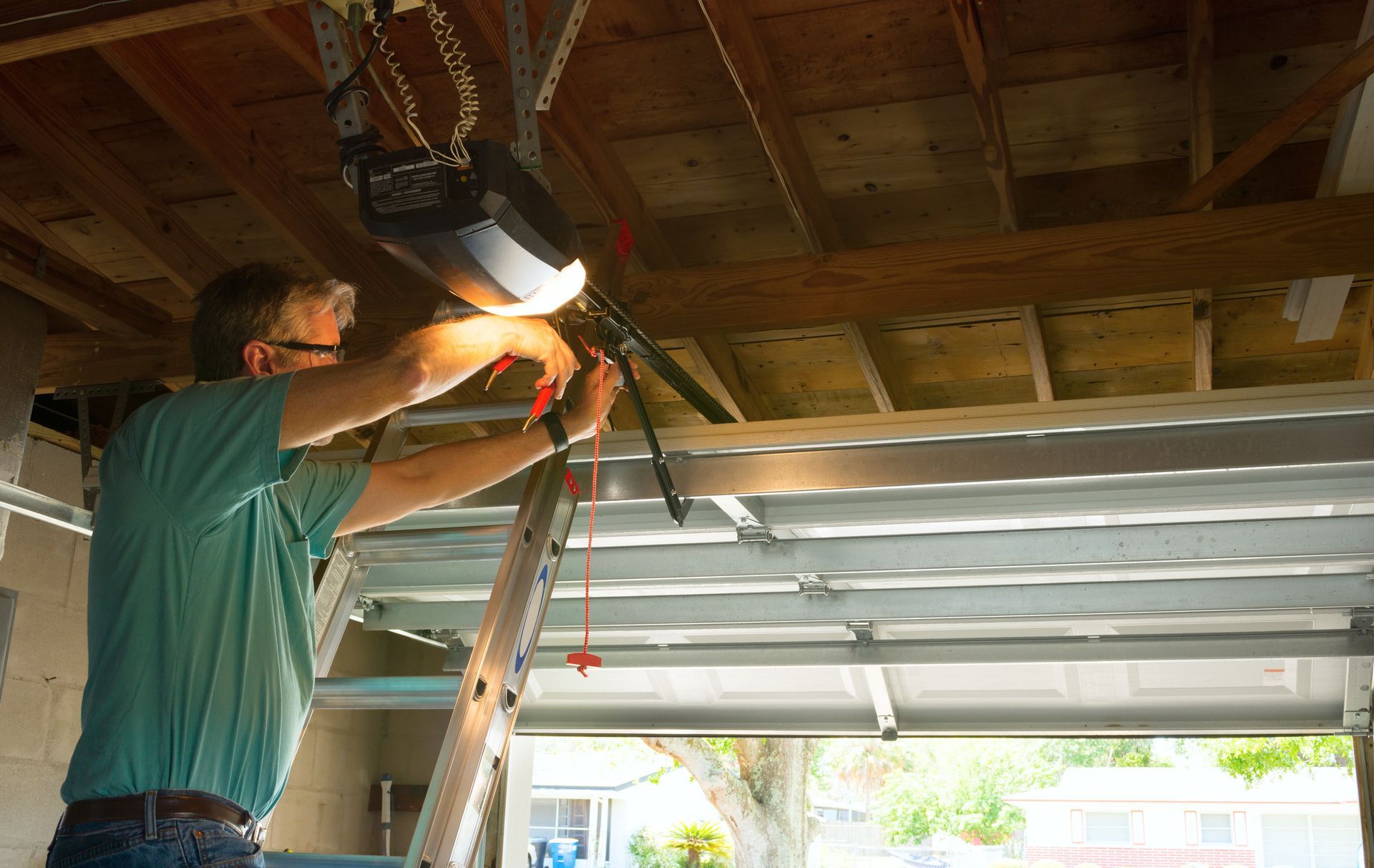
Every garage door opener is required by code to have an emergency release — the red handle that allows you to manually disengage the opener and operate the door by hand during a power outage. This is the same mechanism exploited by the coat hanger technique.
The fix: Install a garage door security shield — a small plastic device that blocks the emergency release trigger from being reached by a hook or wire from outside. These retail for under $20 and take about 10 minutes to install. We can do it on any service visit. It's one of the most cost-effective security upgrades available for any garage door.
Vulnerability #2: The Lack of Interior Door Security
In most attached garages, the door connecting the garage to the house is treated as an interior door — hollow core, basic lock, no deadbolt. Once someone is inside your garage, that interior door is far easier to bypass than your front door. This turns your garage into a staging area for a home break-in: out of sight, protected from weather, with time to work.
The fix: Upgrade the garage-to-house door to an exterior-grade solid core door with a deadbolt. This is a home improvement task, not a garage door task, but it's worth highlighting because it's the most critical layer of defense once the garage itself has been entered.
Vulnerability #3: No Monitoring or Alerts
Most break-ins are crimes of opportunity. A garage door that was left open — even accidentally — is an invitation. Surveys of residential burglars consistently show that open or unsecured garages are among the most common entry points.
The fix: A smart opener with real-time alerts changes this completely. With LiftMaster's myQ or Chamberlain's equivalent platform, you receive a phone notification any time your garage door opens or closes, and you can close it remotely from anywhere in the world. This also solves the "did I close the garage?" question that many homeowners face.
If you have an older opener without smart capabilities, a standalone myQ Smart Garage Hub can add connectivity to most existing openers for under $30.
Vulnerability #4: Old or Weak Remote Codes
Garage door openers manufactured before the mid-1990s used fixed radio codes — meaning your remote always transmitted the same code to open the door. These codes are trivially easy to capture and replay with inexpensive radio equipment. If you have an opener from this era, it's a genuine security vulnerability.
Modern openers use rolling code technology — the access code changes with every use, making code capture useless. If your opener predates rolling code technology, replacement is a security upgrade, not just a convenience one.
Vulnerability #5: Visible Remotes in Vehicles
A garage door remote clipped to a sun visor in a car parked in your driveway is a house key left in plain sight. Car break-ins are common in the Las Vegas Valley; a stolen remote gives thieves direct access to your home, and they'll know your address from the registration in your glove compartment.
The fix: Stop using visor-clip remotes as your primary access method. Use a keychain-style remote that travels with you, or switch to a keypad entry on the garage door frame — accessible without any device, unpickable without the code. Keypads are inexpensive and easy to install.
Quick Security Audit
Count how many of the following apply to your garage: no emergency release shield, old non-rolling-code opener, no smart monitoring, visor-mounted remote, weak garage-to-house door. Each one is a fixable vulnerability. Dogtag Garage Door can address the opener-related items on any service call.
Want to talk through your garage's security posture? We assess security vulnerabilities on every service call and can recommend practical, affordable upgrades. Veteran-owned, honest advice. No upselling.